



Understanding the Difference Between Gold and Silver as Stores of Value
Gold vs Silver Key Differences as Stores of Value for Investors
38views

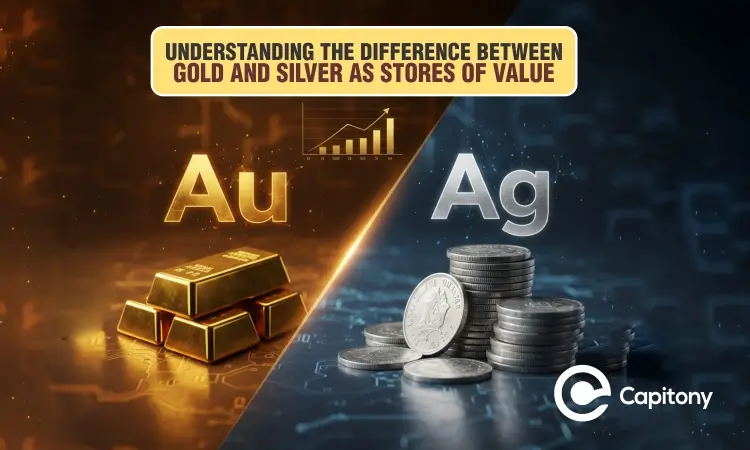
Gold and silver have proved to be good stores of value throughout the centuries. They are both precious metals, but they vary in their uses, and the dynamics of the prices and the investment opportunity. This information on such variations informs individuals on sound and prudent financial choices.
Historical Roles in Financial Systems
Ancient societies have been using gold as a symbol of wealth and status. It was later to be the core of international financial systems and treasuries. Silver was also significant but more used in commerce and money.
Due to this, gold gained a greater reputation as a dependable store of value. Today, central banks still maintain huge gold reserves. This track record instills confidence in the investor in the future security of gold.
The use of silver in history was more commercial and industrial. This makes it have a different perception of wealth storage. The difference continues to affect the investment strategy of every metal.
Scarcity and Global Supply
Gold is a natural resource which is very rare and it is not easily and cheaply extracted. It is estimated that the total number of gold that has been mined will just fill only one large building. Silver is more precious, but is not as abundant as it is in the rest of the world.
Due to this shortage, gold will have a better price and less fluctuation in supply. The presence of silver will have wider accessibility but may cause more volatility in prices. A common choice of investors is to invest in gold due to its stability, depending on its scarcity.
Meanwhile, the abundance of silver makes it appealing to the emerging markets and fewer investors. Purchasing in smaller quantities is easier. This renders silver handy in launching a diversified investment portfolio.
Industrial Demand and Market Sensitivity
Investors and the central banks are the key players in the value of gold. It is used in small scale industrial purposes, primarily in electronics and aerospace. Demand is not pegged to economic cycles, and this explains why its price is stable.
Solar energy, medicine, and electronics industries are the key industries that demand silver. Manufacturing contributes over 50 percent of its yearly consumption. This makes the prices of silver vary with fluctuations in world production and growth.
The economy will increase, hence silver demand will increase. However, during a recession, silver can decrease more quickly than gold. This renders silver more responsive, whereas gold is less exposed to the industrial trends.
Volatility and Risk Considerations
Gold is not a volatile currency, and it can be regarded as a safe haven asset. Gold is also a form of hedging by investors when faced with a crisis or inflation. This move renders gold fixed during different market situations.
Silver is, however, more volatile because it plays dual investment as well as an industrial role. Changes in prices can be acute in short periods of time. This is an opportunity, but it is risky at the same time.
Gold is favored by the investor with low tolerance to price fluctuations. Silver can be considered by those who want to gain in the short run, even though it is riskier. Striking a balance between the two can contribute to a risk-averse and diversified policy.
Accessibility and Investment Methods
Some investors may find it difficult to venture into gold, which is pricier. Silver, which is less expensive per ounce, is more affordable to small and new investors. This renders silver an easy option in beginning physical metal possession.
Both metals may be bought either in the form of coins, bars, or online. Other ETFs, mining shares, and futures are also used by investors to get exposed. Both techniques have trade-offs in terms of cost, liquidity, and taxes.
Storage is also essential because silver needs more space to give the same value. Gold is small and more secure in storage. The decision on how to invest should be made considering all the expenses and objectives of the investors.
Conclusion
Both silver and gold are good stores of wealth; however, they are used in different ways. Gold can be used as a long-term stable, whereas silver can be accessed and allowed to grow. All metals respond to economic changes, business cycles, and investment patterns differently.
Understanding these differences is helpful in the development of good portfolios. An investor needs to think of the amount of risk, financial goals, and market opportunities before choosing. The most effective solution may be mixed metals which offer protection and performance over time.
add a comment
Gold takes off to $5,000: Geopolitical Tensions take off to an all-time high
Key Insights: In 2026, Gold is priced at almost $5,000 per ounce because the economic uncertainty poses a risk. The...


Oil Prices Poised for Surge Cyclical Trends and Economic Factors Hint at Bull Market Ahead for 2027
Oil prices may be approaching a new bullish cycle as historical trends, economic recovery, and geopolitical factors point toward a potential surge by 2027. Past market cycles suggest prolonged stagnation often precedes major price expansions, raising expectations of renewed upside momentum in the years ahead.


Silver Surpasses $100 Mark for the First Time in History: To Reach $100.04
Silver has broken through the historic $100 per ounce mark for the first time, reaching $100.04 on January 23, 2026. The milestone reflects surging demand, shifting market dynamics, and growing investor preference for physical silver over paper contracts, marking a potential turning point for the precious metals market.


Understanding the Inner Circle Trader Strategy
A lot of traders desire a more straightforward interpretation of price movement and evading emotional judgment. The Inner Circle Trader...
