





How ETF Fund Flows Influence Markets and Investor Choices
13views

Table of Contents
The global markets are undergoing a fresh influx of capital as the exchange traded fund flows are being noticed. Investors are following the flow of money in and out of funds, and this tendency is shaping strategic allocations. The flows are still being felt in markets, and their impacts are starting to be felt more prominently in sectors.
Understanding ETF Fund Flows
ETF fund flows monitor the flow of money into and out of funds during certain periods of time. Such movements demonstrate the sentiments of the investors on the sectors, and fund managers watch these indicators to remain ahead. When inflows are increased, confidence is created, and outflows tend to indicate uncertainty proliferating in the market.
These inflows or outflows can either add or take away assets under management of a given fund, and this affects the demand for the underlying holdings. Consequently, this information is valuable to the market observers, and they consult it in combination with price and volume indicators. Every flow event is an indicator of behaviour, and these numbers are monitored by numerous traders in the market as early warning signs of the market.
The ETF flows do not gauge the price performance, and they operate as sentiment indicators. Nonetheless, most perceive them as a strong instrument, and financial institutions still use them. Due to this, the flows of funds are currently included in the major market reports influencing attention.
Market Sentiment and Trends
Fund flows indicate changing sentiment, and the investors act accordingly in the new direction. When inflows are high, traders tend to increase exposure, and when outflows are high, traders tend to reduce risks. These responses affect momentum, and sentiment, in many cases, is a moving force in industries.
Patterns are a flow of funds that allow analysts to identify trends, and they are followed in equities, bonds, as well as crypto funds by various institutions. The flows favouring a sector result in capital rotation, and other sectors can be deprived of allocation. This movement influences larger trends, and this is where both short-run speculation and long-run strategies are guided.
Sentiment is followed by investors, and an increase in inflows is perceived by most as an indicator of better conditions. On the contrary, weakening flows cause concern, and managers tend to change their plans at such stages. These trends are cyclical, and the data is also a well-liked sentiment measurement.
Price Impact and Liquidity
Price Impact
ETF flows affect prices since inflows increase demand and make asset prices higher in sensitive markets. Increasing inflows will lead to authorised participants buying more assets, and the activity will enhance price momentum in trading sessions. Nevertheless, outflows have the potential to offload, which can undermine prices in uncertain times and expansive declines.
Liquidity Effects
Liquidity responds to flow directions and the trading situations are better when the inflows are favoring tight spreads and better markets. The more the inflows accumulate, the stronger the liquidity and investors are able to transact easily through stable prices and swift transaction rates. As outflows increase, spreads become wider, and the trading becomes more difficult as volatility interferes with confidence and impacts the volume.
Market Stability Link
This relationship between flows and market stability influences the behaviour of the prices and establishes the connections between the related financial instruments. It is particularly noticeable in concentrated markets where large ETFs cause changes in prices by changing supply and demand. Due to this fact, analysts pay close attention to flows and treat the information as the central element of market analysis.
The Crypto and Spot ETFs Role.
The establishment of Spot Bitcoin ETFs opened up a new institutional demand channel, which transformed the crypto world. During the strong cycles, inflows may compel money to purchase more Bitcoin, and that will drive prices up. This is also reversed by the outflows, and the weak periods could cause further selling pressure on the asset.
These ETFs provide investors with controlled exposure, and the flow has been taken up to the larger market of digital assets. When massive trades enter or leave, the liquidity changes, and this may send messages to other traders. These waves are what make headlines, and the markets are becoming very responsive.
The growth in spot ETFs is still ongoing, and additional products are making their way into international markets. Due to this fact, investors are on their toes, and the inflows of funds are being monitored as the economic indicators are. The correlation between flows and crypto prices has become quite a well-known fact.
Limits and Strategic Use
ETF flows represent an insight, yet are not completely accurate in projecting future movement. Their combination with technical and macro tools is still done by managers, and this serves to minimise misreading. Flow data may also be deceptive in case of rebalancing, and that produces fake indications when everything is stable.
Short term randomness occasionally affects the processes of flow readings, and markets are prone to respond to occurrences unrelated to them. Due to these limitations, flow data is most effective when used together with confirmation signals. Nonetheless, it still remains a fundamental reference point of analysts and portfolio teams.
The flows help investors to control exposure, track risk, and inform allocation decisions. Flow analysis can be used in conjunction with discipline to reinforce planning and minimise blind spots. Markets still use this strategy, and fund flows have taken over the strategy and direction.
Conclusion
The flows of ETF funds still take control of investor behaviour, and they affect markets with the sentiment, liquidity, and price responses. The information is insightful, and it is useful when making decisions in collaboration with other tools. Due to this fact, the flow of funds will continue to be one of the key drivers in present-day investing.
add a comment

Understanding the Inner Circle Trader Strategy
A lot of traders desire a more straightforward interpretation of price movement and evading emotional judgment. The Inner Circle Trader...


Cardano Sees Price Surge as Volume Spikes and Institutional Interest Grows
Cardano's volume surged by 72%, helping ADA break the $0.42 price point amidst growing investor interest. Whether it is intentional...

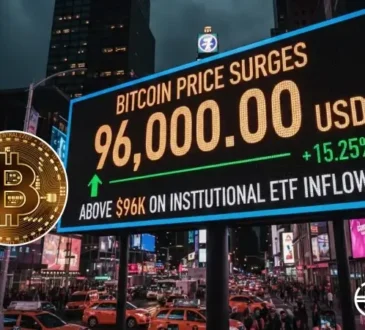
Bitcoin Price Surges Above $96,000 on Institutional ETF Inflows
The fact that Bitcoin has risen to above $96,000 indicates that more institutions have ventured into the cryptocurrency sector. The...


Cardano’s price may hit up to $10, as analysts believe that the growth in the long run will be vivid
On Friday, ADA increased 1.3% and traded at $0.400, above its year-to-date low of $0.3280. Quantum Ascend forecasts a price...
